
Views: 0 Author: Site Editor Publish Time: 2026-05-26 Origin: Site
Aluminum is the undisputed backbone of the CNC machining industry. At Feieer Tech, we know that for OEM engineers and product designers, selecting the right aluminum grade is a critical decision that directly impacts part performance, manufacturing costs, and production lead times. Whether you are developing lightweight drone frames, robust automotive fixtures, or marine-grade enclosures, aluminum offers an unmatched balance of machinability, strength-to-weight ratio, and cost-effectiveness.
However, not all aluminum is created equal.
If you need a fast recommendation for your next project, here is the industry consensus for the most reliable aluminum alloys:
6061 Aluminum: Best overall choice. Offers the perfect balance of excellent machinability, weldability, and cost.
7075 Aluminum: Best for high-strength applications. Competes with steel in the aerospace and defense sectors.
5052 Aluminum: Best for marine environments and applications requiring extreme corrosion resistance.
2024 Aluminum: Best for high fatigue resistance, typically used in structural aircraft components.
MIC6: Best for precision tooling plates requiring absolute flatness.
To help you make an immediate, data-driven decision, here is a head-to-head comparison of the most common CNC aluminum alloys.
| Aluminum Alloy | Machinability | Strength | Corrosion Resistance | Weldability | Typical Applications |
|---|---|---|---|---|---|
| 6061 | Excellent | Medium | Excellent | Excellent | General OEM parts, housings, fixtures |
| 7075 | Good | Very High | Moderate | Poor | Aerospace, defense, performance racing |
| 2024 | Moderate | High | Poor | Poor | Aircraft structures, high-stress parts |
| 5052 | Good | Medium | Excellent | Excellent | Marine hardware, outdoor sheet metal |
| MIC6 | Excellent | Low | Good | Moderate | Precision jigs, measurement tooling plates |
When engineers ask exactly why aluminum is used in CNC machining over other metals, the answer usually comes down to its unparalleled balance of physical properties and cost-efficiency. It perfectly bridges the gap between the low cost of plastics and the extreme strength of steel.
Here are the core aluminum CNC advantages that make it the go-to material for both rapid prototyping and high-volume manufacturing:
Exceptional Machinability: One of the most significant benefits of aluminum machining is how easily and quickly the material can be cut. Because it is softer than steel and titanium, machinists can use aggressive feed rates and high spindle speeds. This results in minimal tool wear, faster cycle times, and ultimately, much lower production costs.
High Strength-to-Weight Ratio: Aluminum is approximately one-third the weight of steel, yet certain alloys (like 7075-T6) offer tensile strength that rivals mild steel. This makes it indispensable for weight-critical applications like EV components, robotics, and drones.
Natural Corrosion Resistance: When exposed to air, aluminum spontaneously forms a microscopic, highly protective oxide layer. This intrinsic property keeps the internal metal safe from rust and environmental degradation.
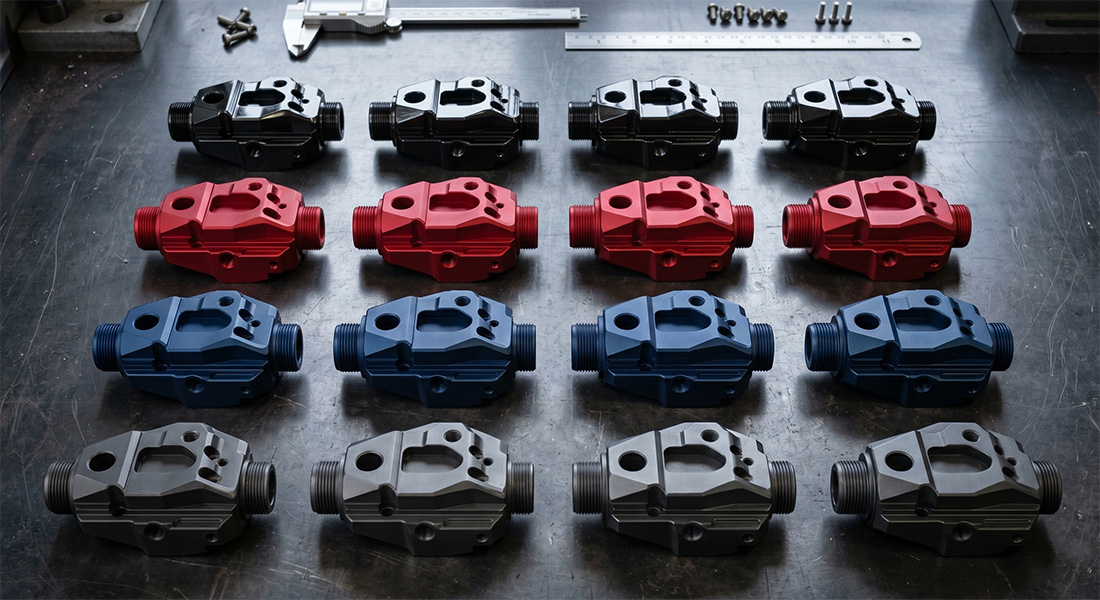
Superb Surface Finishes: Aluminum parts leave the CNC mill with a naturally clean, smooth finish. More importantly, they respond perfectly to secondary surface treatments like Type II cosmetic anodizing, Type III hardcoat anodizing, bead blasting, and powder coating.
When selecting aluminum for CNC machining, the most common engineering debate is 6061 vs 7075. While both alloys are widely used in precision manufacturing, they serve very different applications.
| Property | 6061 Aluminum | 7075 Aluminum |
|---|---|---|
| Strength | Medium | Very High |
| Machinability | Excellent | Good |
| Corrosion Resistance | Excellent | Moderate |
| Cost | Lower | Higher |
| Weldability | Excellent | Poor |
| Typical Applications | General OEM parts | Aerospace & defense |
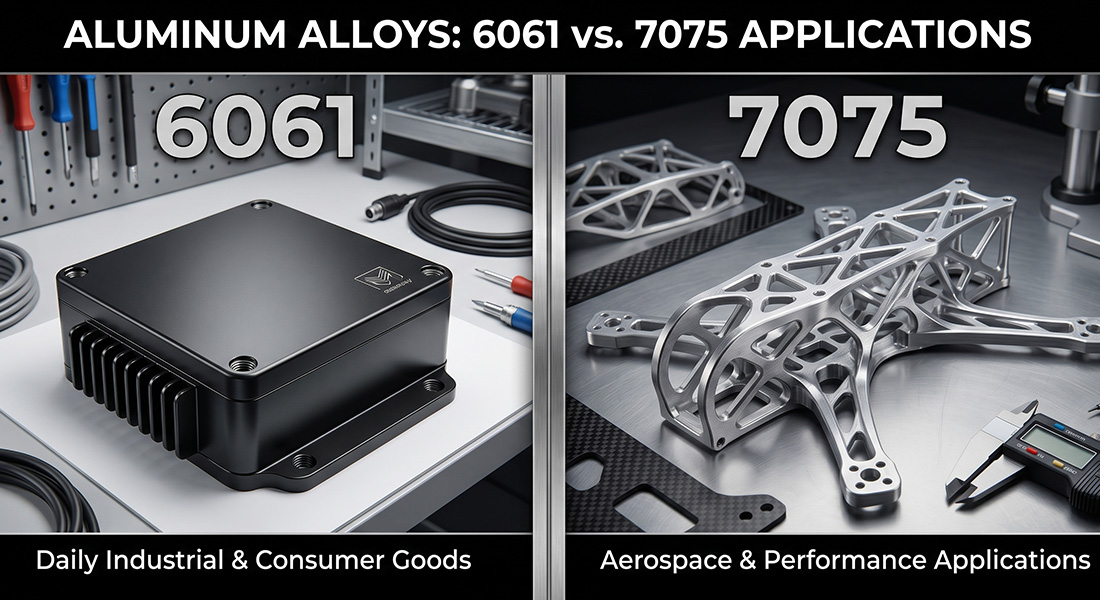
6061 is the best all-around aluminum alloy for CNC machining. It is cost-effective, easy to machine, and ideal for anodizing. Most consumer products, automation equipment, and industrial fixtures use 6061 due to its balanced properties.
7075 aluminum is preferred when maximum strength and rigidity are required. It is commonly used in aerospace structures, racing components, drone frames, and military applications where lightweight performance is critical.
Unsure which alloy fits your project? The wrong choice could lead to unnecessary costs or part failure. Contact the engineering team at Feieer Tech for a free material consultation to help you select the optimal alloy.
While aluminum is highly machinable, applying Design for Manufacturability (DFM) principles can drastically reduce your machining costs, minimize production time, and ensure superior part quality. Here are the critical design guidelines OEM engineers should follow when designing custom aluminum parts in 2026.
Because aluminum has a lower melting point and high thermal conductivity, it is susceptible to heat distortion and vibration (chatter) during the machining process if the walls are too thin.
Minimum Wall Thickness: 0.5 mm (0.020 inches) is the absolute minimum for standard aluminum machining.
Recommended Wall Thickness: We strongly advise keeping wall thicknesses above 1.0 mm (0.040 inches) for optimal structural integrity.
If your design requires ultra-thin walls, consider switching to stronger alloys like 7075-T6, but be prepared for slower cutting speeds and higher machining costs.
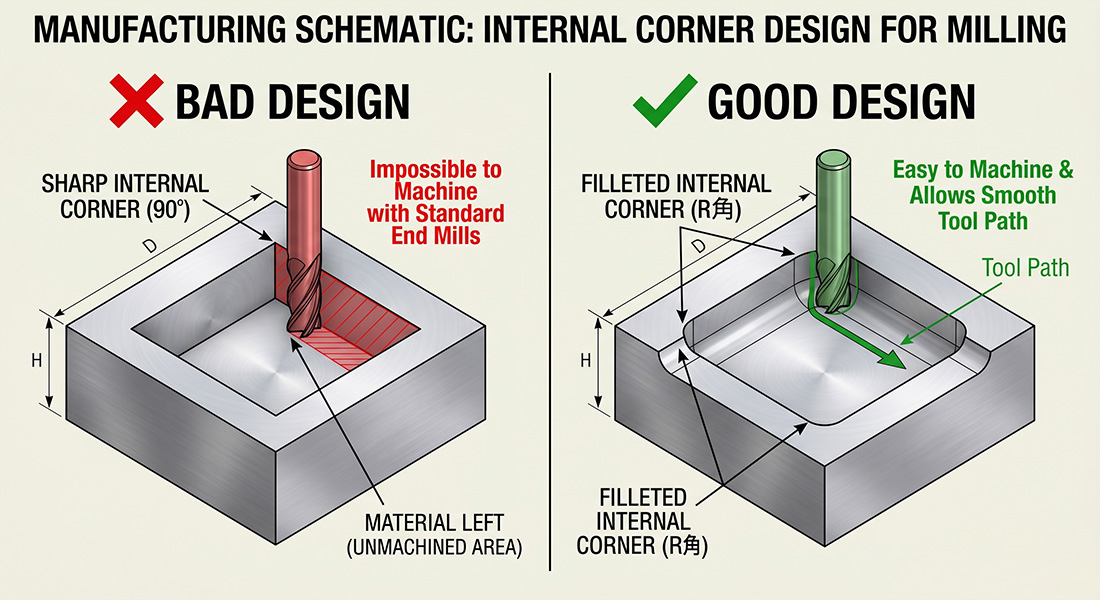
One of the most common reasons for inflated CNC machining quotes is the inclusion of sharp internal corners. CNC milling tools are cylindrical and naturally leave a radius when carving out pockets.
To avoid the need for expensive secondary operations like Electrical Discharge Machining (EDM):
Always add a fillet (radius) to internal vertical corners.
The Golden Rule: The corner radius should be at least 1/3 of the cavity's depth (e.g., if the pocket is 15mm deep, the internal radius should be at least 5mm).
Allowing for slightly larger corner radii enables the machinist to use larger end mills, which remove material much faster and reduce tool wear.
When designing threaded holes for aluminum parts, deeper is not always better. Because aluminum is softer than steel, threads are easier to cut, but broken taps can easily ruin a nearly finished part.
Keep thread depth to a maximum of 1.5x to 2x the hole diameter. Any thread deeper than this adds no significant pull-out strength to the joint.
For blind holes, ensure you add an unthreaded depth of at least half the hole diameter at the bottom to accommodate tap lead-in.
If the threaded hole will experience repeated assembly and disassembly, consider designing for helical inserts (Heli-Coils) to prevent the soft aluminum threads from stripping over time.
Aluminum is excellent at holding tight tolerances, but over-tolerancing is the fastest way to double your manufacturing costs.
Standard Tolerances: Most general-purpose 6061 aluminum parts can easily hold a standard tolerance of ± 0.125 mm (± 0.005 inches).
Precision Tolerances: For aerospace or high-precision automotive components, tighter tolerances of ± 0.025 mm (± 0.001 inches) can be achieved.
Pro Tip: Only apply tight tolerances to critical mating surfaces or bearing fits. Leave non-functional cosmetic dimensions to standard block tolerances.
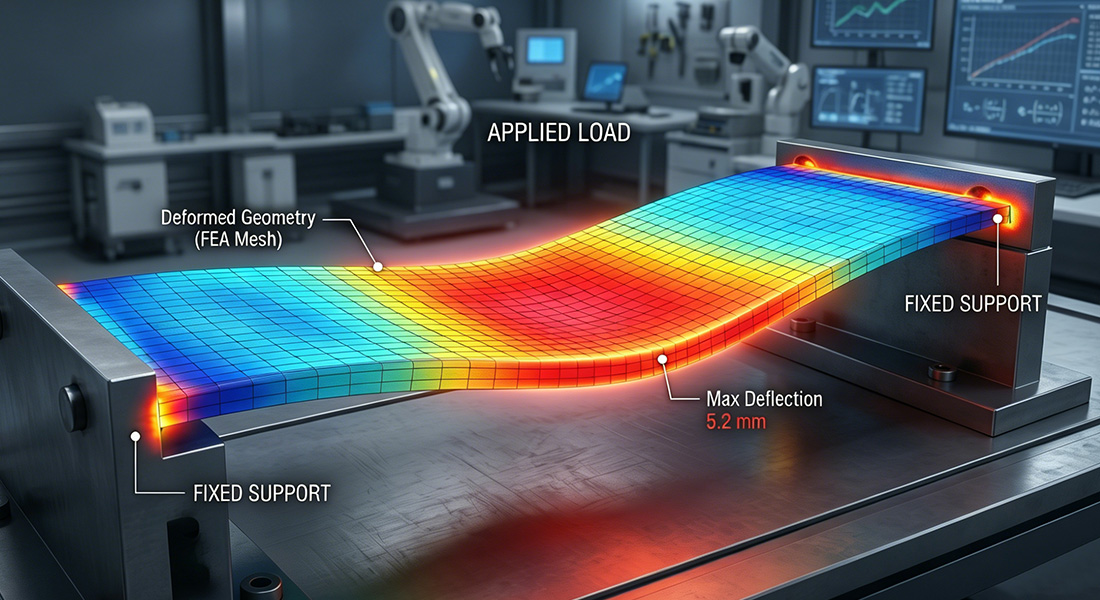
Residual stress is a hidden enemy in aluminum machining. When raw aluminum stock is manufactured, internal stresses build up. As the CNC machine removes large volumes of material (especially in asymmetrical designs), these stresses are released, causing the final part to warp or bow.
Use Stress-Relieved Alloys: Always specify aluminum grades with a "Tx51" temper designation (e.g., 6061-T651 or 7075-T651). These materials have been stretched at the mill to relieve internal stress before machining.
Symmetrical Design: If possible, design parts so that material can be removed equally from both sides.
Roughing and Finishing Passes: For large, flat components, your manufacturing partner should employ a roughing pass to remove the bulk material, allow the part to settle, and then perform a final finishing pass to hit the exact dimensions.
6061 aluminum is considered the best overall alloy for CNC machining because it offers excellent machinability, corrosion resistance, weldability, and affordability.
6061 is easier to machine than 7075 because it is softer and produces less tool wear during high-speed machining.
7075 and 2024 aluminum are commonly used in aerospace applications due to their high strength-to-weight ratio and fatigue resistance.
6061 aluminum is widely regarded as the best aluminum alloy for anodizing because it produces a consistent and attractive surface finish.
Yes. CNC-machined aluminum parts can commonly achieve tolerances as tight as ±0.025 mm depending on part geometry and machining conditions.
Choosing the right aluminum alloy is only half the battle. By pairing the correct material—whether it’s the versatile 6061, the high-strength 7075, or the corrosion-resistant 5052—with smart DFM principles, you can significantly reduce your manufacturing costs and speed up your time to market.
Ready to start manufacturing your custom aluminum parts?
Our ISO-certified manufacturing facilities and experienced OEM engineering team are ready to bring your designs to life with uncompromising precision.
Get an Instant Quote: Upload your CAD file (STEP, IGES) today for a free DFM review and pricing.
Need Engineering Support? Contact the Feieer Tech B2B sales engineers to discuss material selection, tolerances, and surface finish options for your next project.


